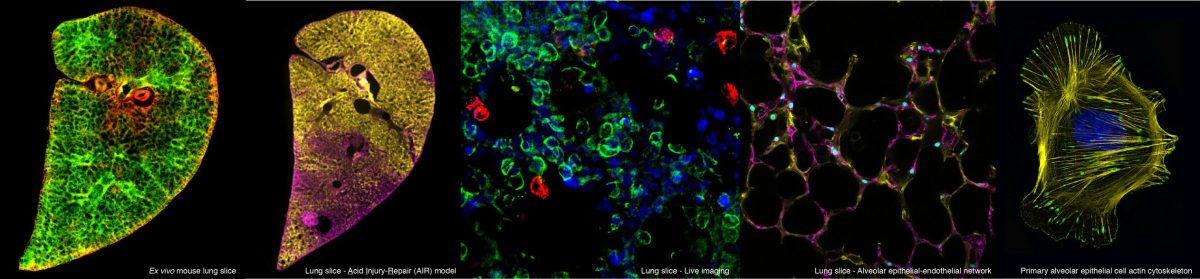
We are pleased to share three recent publications from the Dean Lab, highlighting our work to understand the mechanisms that drive lung repair and regeneration.
🫁 Retinoic acid promotes lung repair through TGFα-EGFR signalling
This study addresses an important question: how does retinoic acid (RA) promote lung regeneration?
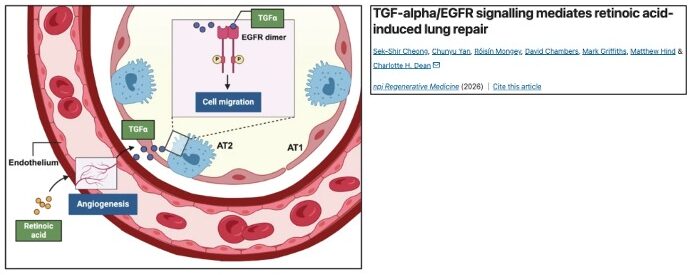
Although RA has long been recognised as an important regulator of lung development and repair, its effects on alveolar epithelial repair are not fully understood. We found that RA promotes angiogenesis in lung endothelial cells and, importantly, through transcriptomic analysis and functional experiments, we identified TGFα as an important mediator of endothelial–epithelial communication. TGFα activates EGFR signalling in alveolar epithelial cells and promotes epithelial cell migration, providing a potential mechanism through which vascular responses can support epithelial repair.
These findings emphasise that successful lung regeneration is not simply a matter of stimulating individual cell populations. Instead, effective repair depends on communication between multiple cell types within the lung microenvironment.
Read the publication
🫁 A human model to study lung injury and repair
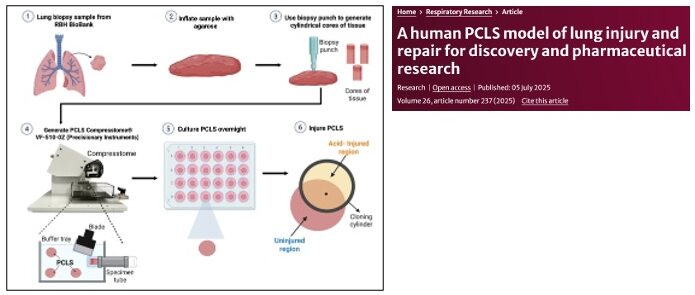
Building on our previously established mouse PCLS-AIR model, we developed a human Acid Injury and Repair (hAIR) model using human precision-cut lung slices (PCLS). The model allows us to generate a spatially defined area of injury within human lung tissue while retaining the complex interactions between epithelial, endothelial, stromal and other resident lung cell populations. This provides a powerful platform for studying repair responses in a physiologically relevant human tissue environment and for investigating potential therapeutic targets.
The hAIR model forms an important part of our ongoing efforts to bridge fundamental discoveries in lung biology with translational research and therapeutic development.
🫁Wnt-Planar Cell Polarity (PCP) signalling and alveolar repair
This study investigated how Wnt5a and the planar cell polarity pathway influence lung repair following injury.
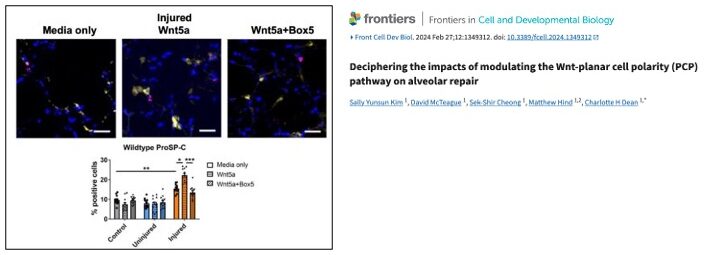
Using our 3D ex vivo lung injury and repair model, we found that Wnt5a enhances the alveolar epithelial progenitor cell response following injury. We also showed that disruption of the PCP pathway affects the mechanical properties and migratory capacity of lung epithelial cells, providing new insight into how Wnt signalling contributes to effective tissue repair.
These findings highlight Wnt5a–PCP signalling as a potential pathway for developing strategies to enhance endogenous lung repair.
Read the publication