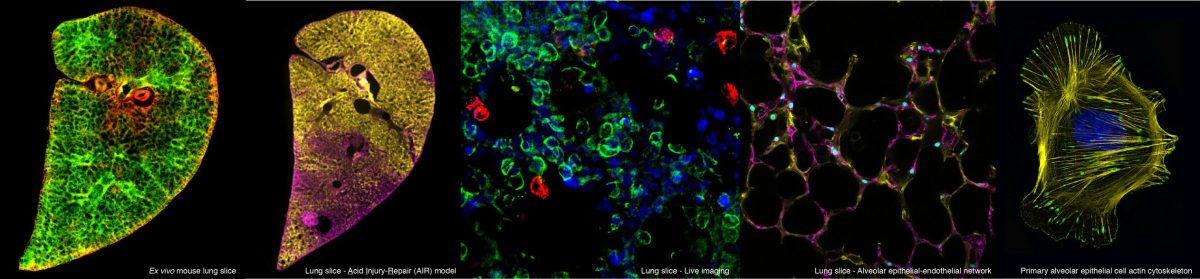
TReATS (TAT-Cre recombinase-mediated floxed Allele modification in Tissue Slices) is a method we developed to enable rapid genetic manipulation of ex vivo precision-cut lung slices (PCLS).
Using cell-permeable TAT-Cre recombinase, floxed genes can be deleted or activated directly in lung tissue, without the need for additional Cre-driver breeding. This provides a flexible approach to investigate gene function while preserving the native three-dimensional architecture and cellular interactions of the lung.
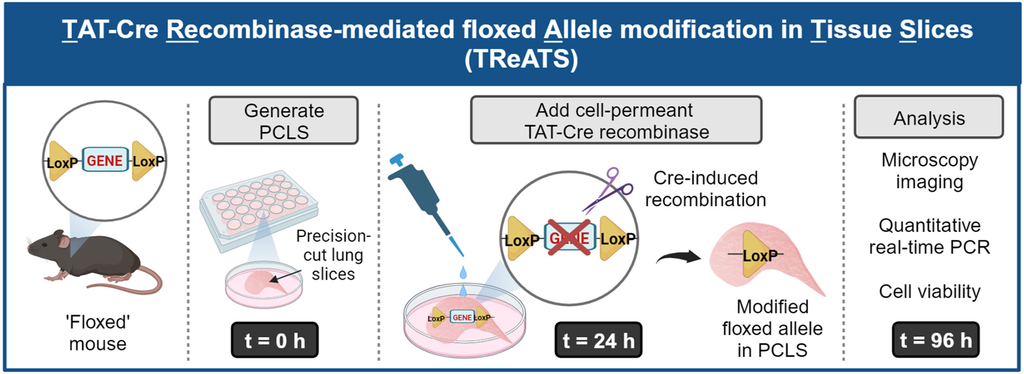
We have demonstrated that TReATS can efficiently activate reporter genes and delete endogenous genes in PCLS, providing a powerful tool for mechanistic studies, disease modelling, and target function validation.
TReATS provides a flexible platform for:
- Gene deletion — investigating the function of specific genes in adult lung tissue
- Gene activation — activating floxed reporter or conditional alleles directly in PCLS
- Mechanistic studies — determining how specific genes regulate cell behaviour and tissue responses
- Disease modelling — investigating gene function in lung injury and disease models
- Target validation — testing the consequences of manipulating candidate therapeutic targets in intact lung tissue
- Reducing animal use — enabling genetic experiments to be performed ex vivo and allowing PCLS from the same animal to serve as experimental controls
An key advantage of TReATS is that gene manipulation can be initiated after tissue harvest, providing temporal control over genetic modification and avoiding developmental effects associated with earlier in vivo gene deletion. The method also reduces the need for complex breeding strategies and can help overcome challenges associated with embryonic or perinatal lethality.
Relevant publications: Cheong et al. 2023 Cheong et al. 2024