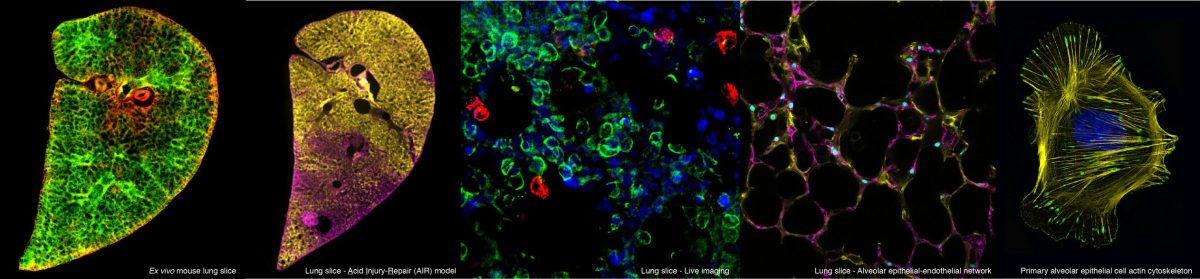

Dr Charlotte Dean – Group Leader
Associate Professor in Lung Development and Disease, National Heart & Lung Institute, Imperial College London
Identifying novel factors important for the repair of diseases or damaged lungs
Many adult lung diseases involve abnormal tissue repair. These diseases are poorly understood and there is an urgent requirement for treatments. Although once thought to be incapable, recent work has shown that adult lungs are able to repair/regenerate tissue under certain conditions. Our aim is to harness the intrinsic capacity of adult lung cells to repair damaged tissue using several approaches.
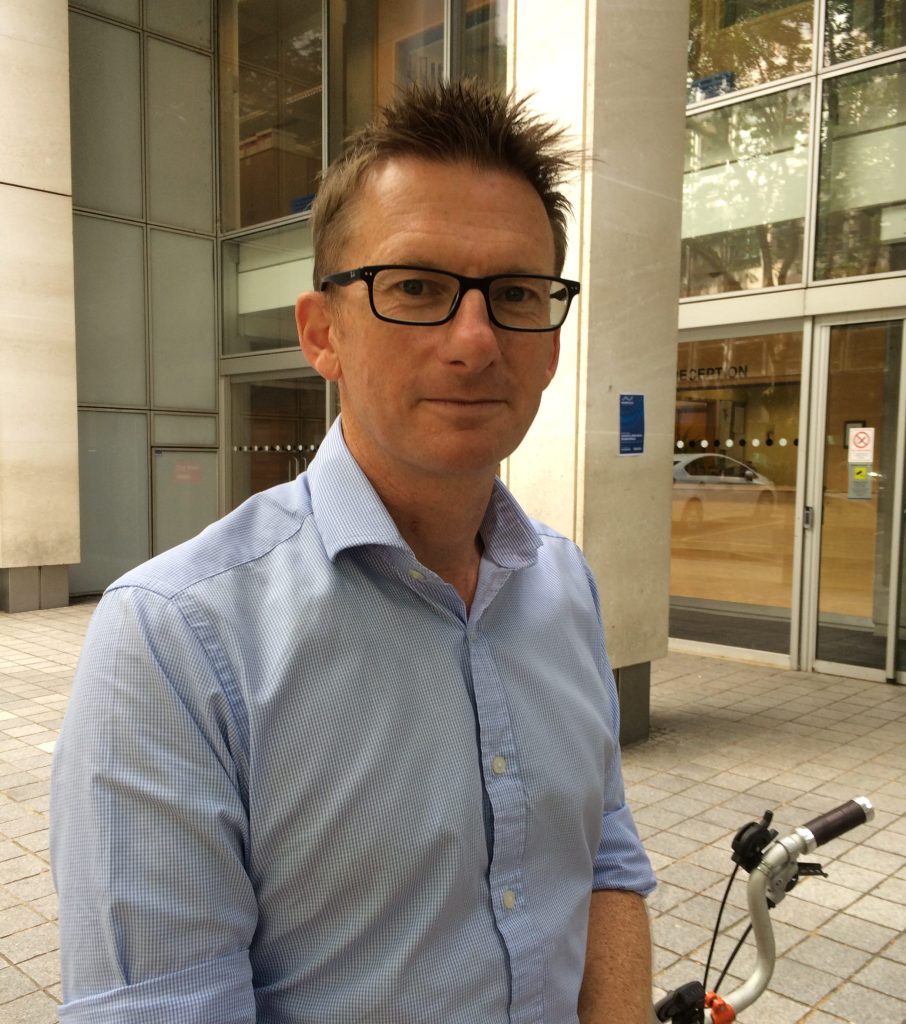
Honorary Clinical Senior Lecturer, National Heart & Lung Institute, Imperial College London
Dr Hind is a respiratory physician who believes the cellular and molecular cues which control development may be used to induce lung regenerative programmes conserved across species. He has used derivatives of vitamin A including retinoic acid, identified as essential for regeneration in a wide variety of animals and organ systems from limbs in axolotls, hearts in zebrafish to lungs of mouse and rat to study alveolar regeneration in human lung models of increasing complexity including primary cells, lung slices and ex vivo lung perfusion models of lung injury. Within the Lung failure group he has established a developmental lung disease clinic at Royal Brompton Hospital.
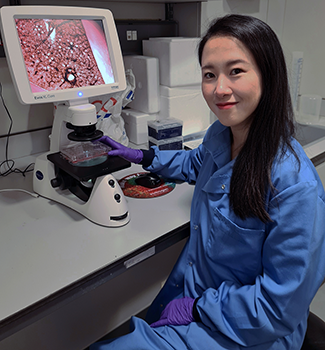
Research Associate, National Heart & Lung Institute, Imperial College London
Dr Cheong is a research associate funded by the Royal Brompton & Harefield Hospitals Charity. Using ex vivo 3D Precision-Cut Lung Slices (mini-lung) and in vitro cell models, her research is focused on delineating the role of Wnt/Planar Cell Polarity and Retinoic Acid signalling in promoting lung repair following injury. She is also currently developing different novel methods of manipulating gene/mRNA in ex vivo human and mouse 3D lung tissues, which have potential to be extended to other organs/systems. In collaboration with Imperial College London Consultants (ICON), Sek-Shir also consults on the application of PCLS Acid Injury Repair (AIR) model that the lab developed for semi-highthroughput pre-clinical drug screening to identify potential targets to repair lung injury.

(Rebecca) Qi Chen
PhD candidate, National Heart & Lung Institute, Imperial College London
Rebecca Chen is a PhD student supervised by Dr Charlotte Dean and Dr Sally Kim, investigating extracellular vesicle-derived therapeutic approaches for lung repair.
Rebecca’s project is focused on the therapeutic potentials of extracellular vesicles derived from precision cut lung slices, which likely contain the intrinsic repair factors produced by the lungs. Specifically, she aims to determine the key protein and micro-RNA contents of extracellular vesicles that underlie the high regeneration ability of the developing lungs, and investigate their therapeutic effects in driving lung repair, using the acid injury and repair (AIR) model that was established in the lab.

Siyao Huang
PhD candidate, National Heart & Lung Institute, Imperial College London
Siyao Huang is a PhD student supervised by Dr. Charlotte Dean and Dr. Matthew Hind.
Her research focuses on the role of Wnt11 in lung repair. Wnt proteins are growth factors involved in tissue repair and regeneration. Siyao aims to define the expression pattern of Wnt11 in mouse lung and to determine whether Wnt11 modulates lung repair and regeneration using the Acid Injury and Repair (AIR) model developed in the group.

Chloe Wilson
PhD candidate, National Heart & Lung Institute, Imperial College London
Chloe is a PhD student supervised by Dr. Charlotte Dean and Dr. Alexander Ainscough.
Her research focuses on investigating the mechanisms of lung repair and regeneration using re-cellularised precision-cut lung slices (PCLS). By repopulating de-cellularised lung tissue with epithelial and stromal cells, she aims to understand how the extracellular matrix influences cell behaviour during regeneration and to develop physiologically relevant ex vivo models of lung repair.